
In our world today, energy has become so important that we cannot exist or be productive without access to energy; whether for production, business, transportation, agriculture, electricity etc. Energy access is essential to solving issues in life. Unfortunately looking around us today, we see that quite a lot of lives are in danger because they live in total blackout, economy growth is dwindling due to lack of power. Similarly, the major source of power that is being utilized is even destroying lives, biodiversity and agriculture, as a result the environment has become a polluted place to dwell in.
In this regard, Green Preserve Initiative was established as a non- profit organization to complement the ongoing effort of government, private sector, civil society and relevant stakeholders in achieving universal access to clean, affordable and reliable energy technologies in accordance with SDG 7 by 2030, under the Paris agreement towards reducing global temperatures below 2o Celsius. It will also focus on combating global climate change through awareness-raising and environmental sustainability in accordance with SDG 13.
Green Preserve will be providing sustainable solutions that will help solve these issues in order to achieve SDG 7 and SDG 13. Through investments in clean, affordable, reliable and sustainable energy, we will work to reduce the impacts of climate change on the environment and human lives; and to help people achieve maximum benefits from energy conservation and efficiency, thereby fostering a green and sustainable environment for all.
Where there is no access to clean and sustainable energy, SDG7 will become unachievable, poverty and insecurity level will increase, education system will be hampered, people’s health will be at risk, and the economy will be affected adversely. In the remote areas for example, switching from open flame stoves to clean cooking stoves like energy saving cooking stove and biogas which will help save the lives of mothers and children from cancer, lung and heart diseases.
About 13% of the world population lack access to electricity, as a result they are denied access to use basic amenities like bulbs, refrigerators, fans etc. In Africa, a lot of people live in the dark, in Nigeria alone, about 80 million people live without electricity according to the world bank.
Green Preserve will work with our partners and stakeholders on transitioning from fossil fuels to renewable energy technologies. This will be achieved by collaborating with our partners, stakeholders, and will focus on energy access development projects that will provide electricity access to populations speedily, especially in the remote areas. As a result, electricity access will be delivered faster through decentralized off-grid solar solutions rather than conventional grid-based approaches that are time consuming and pricey. Achieving this will be beneficial for our climate, households, public educational institutions and businesses, it will also ensure the possibility of sustainable United Nations energy target for all by 2030.
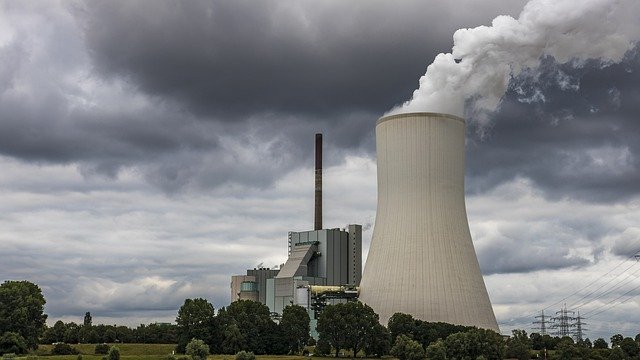
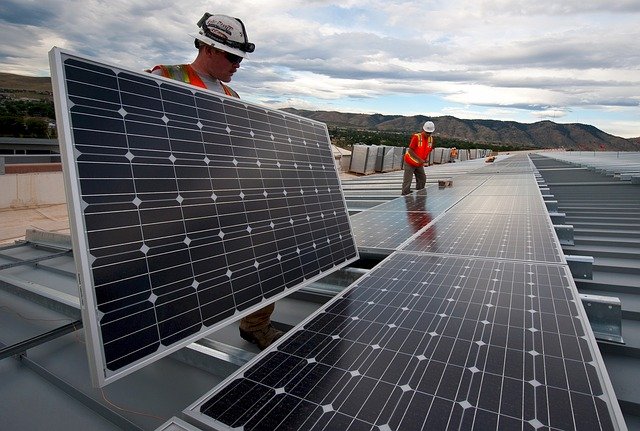
Energy generation and utilization is very essential to the realization of the 2015 Paris Agreement on climate change where a consensus have been reached on carbon emission reduction that will lower global temperature below 2° Celsius. Hence, it becomes imperative to improve our stewardship of the environment and conserve energy efficiently which will help save money, reduce greenhouse gas emissions and their negative effects.
All over the world, people have gained so much from energy efficiency; from saving costs to consuming less energy and reducing their carbon footprint. Countries like Germany, Brazil and Turkey have reached low carbon emission intensity because they have prioritized energy efficiency in their economy. Despite the huge benefits associated with energy efficiency, many African countries are lagging behind because of the challenges encountered in achieving energy efficient economy. Some of which include low awareness on the benefits of energy efficient buildings, poor understanding of energy efficiency, lack of funds for energy efficiency projects, poor regulatory policies for energy efficiency.
Energy efficiency investments in many African countries, can reduce carbon emissions, save more money, reduce carbon footprint per capita, create employments and increase the market for energy efficient technologies and allow increased distribution of electricity supply in a sustainable manner. Our focus on energy efficiency is to accelerate specific actions under two interventions:
Green Preserve Initiative will promote climate change literacy and sustainability in accordance with SDG 13, which will be achieved by educating the public using schools as a contact point, on climate change and renewable energy education. In addition to this, we will work with the United Nations goal of limiting global temperature rise to well below 2° Celsius, through the lowering of heat trapping gases in the atmosphere known as ‘’greenhouse gases’’. This will be achieved via Carbon footprint reduction.
The consequences of global warming is experienced all over the world, ranging from extreme weather events, to sea level rise, increased temperatures, diminishing Arctic ice, shifting precipitation pattern among others. The Intergovernmental Panel on Climate Change (IPPC), have enjoined everyone on a global scale to change our daily lifestyles so we can offset our carbon emissions which will assist in the global warming mitigation. We can reduce our carbon footprints through improved energy efficiency and adopting green life styles.
What’s more, we can also offset our carbon footprint by supporting or funding projects around us that reduce environmental pollution or greenhouse gas emission.
It is the total amount of greenhouse gases (methane [CH4], nitrous oxide [N2O], water vapor, chlorchlorofluorocarbons [CFC], ground level ozone [O3]) emitted into the atmosphere through an individual, household or industrial activities. These includes activities like fossil-fuel combustion in transportation, production, heating, electricity generation and many others. It is calculated as carbon dioxide equivalent using a 100 year global warming potential (GWP 100).
We all experience the consequences of global warming all over the world, ranging from extreme weather events, to sea level rise, increased temperatures, diminishing Arctic ice, shifting precipitation pattern among others. The Intergovernmental Panel on Climate Change (IPPC), have enjoined everyone on a global scale to change our daily lifestyles so we can offset our carbon emissions which will assist in the global warming mitigation. We can reduce our carbon footprints through improved energy efficiency and adopting green life styles. What’s more, we can also offset our carbon footprint by supporting or funding projects around us that reduce environmental pollution or greenhouse gas emission.
Our Mission is to tackle energy poverty by promoting access to clean energy, adopting energy efficient lifestyles that will mitigate environmental pollution and to create more awareness on global warming.
To decarbonize the power sector means reducing the intensity of greenhouse gas emission that is been generated on every unit of electricity in order to achieve a carbon neutral economy.
Electricity generation and consumption alone accounts for about two-thirds of the global carbon dioxide emissions. Hence it becomes more critical to urgently proffer solutions that will save the world from the looming environmental crises. To achieve this, one lasting solution will be to decarbonize the power sector by changing the mode of energy generation like fossil fuel to renewables like Solar and becoming more energy efficient. Though all over the world, there have been huge progress on renewable energy technologies like solar, wind, energy efficiency amongst others, but we have still not been able to reach the emission reduction target required by the Paris goals which is to keep temperatures below 2o Celsius to avoid huge impact of climate change.
In times like this, where we are all experiencing severe climate change impacts all over the world such as abnormal surface temperature, shifting precipitation patterns, melting of the Arctic, Ocean acidification, biodiversity loss, extreme weather events and many more; a swift action is required to decarbonize the power sector. This entails the deployment of innovative energy technologies that are marketable and easily accessible. Achieving net zero energy emissions means shifting from high-carbon coal electricity generation to cleaner renewable energy source like solar power. Our energy efficiency projects focuses on three key areas where critical solution is needed for deep power sector decarbonization:

Distributed Energy across Africa
© Copyright 2020, Green Preserve Initiative